
Trai has submitted 26 recommendations to the government and released 30 consultation papers so far this year, up from seven and 20, respectively, in 2007. Few of its recommendations are actually accepted by the govt.
Broadcast regulator Telecom Regulatory Authority of India will hold a meeting with the stakeholders on Thursday to discuss how to roll-out conditional access system in the metros.
The interim broadcast regulator being considered by the government for expedient resolution of CAS imbroglio may also enforce programming code and regulate content on television, official sources said in New Delhi on Tuesday.
For the first time in nearly two years since the conditional access system (CAS) had been enforced in select areas of Delhi, Mumbai and Kolkata, the prices of pay channels have been revised by the broadcast regulator based on inflation.
The roll-out of the conditional access system will become mandatory in 57 cities in the country in a phased manner between January 2008 and March 2011.
In a move, which may allow direct-to-home service providers to beam exclusive channels, the Telecom Regulatory Authority of India has sought a review of the existing policy, which bars such channels on DTH platforms.
Trai has announced that it may fix prices of pay channels on the direct-to-home (DTH) platform in line with the Rs 5 per channel cap on conditional access system (CAS) services in Delhi, Mumbai and Kolkata. This move will lower the fees but hit the income of broadcasters from DTH companies. However, new DTH entrants will benefit from the move as their cost of content will decrease. For the 2 existing DTH companies, Dish TV & Tata Sky, the current rates are likely to continue.
A total of 25 new pay channels have hit the Indian TV screens since December 26, 2003, according to figures released by the broadcast regulator, Telecom Regulatory Authority of India.
Lifting restrictions on airing news and current affairs and permitting licensees to own multiple licences are among a host of issues Trai has put up in its first consultation paper on FM radio privatisation on Wednesday.
Broadcast regulator TRAI on Monday asked the government to defer the controversial conditional access system for at least another three months, maintaining that this suggestion does not in any way contravene the high court order on the issue.
Telecom operators can look forward to offering all telecom and broadcasting services, including cable TV, DTH, STD, ISD and radio, through a single licence by paying a one-time fee of Rs 107 crore (Rs 1.07 billion).

Reiterating its position, TRAI, which oversees both the telecom and television sectors in the country, said the amendments suggested on January 1 had been done to correct "distortions" in the market and address pricing issues.

Merging tribunals may lead to administrative convenience, but pendency of cases is likely to increase

'As in all our previous cases of suspected panel homes intrusions, BARC India continues to follow its established vigilance and disciplinary guidelines... BARC India appreciates the efforts of the Mumbai Police and will provide the support asked of it,' a BARC India spokesperson said.

Pakistan electronic media regulatory authority which comes the federal information ministry on November 2 had asked all broadcasters to refrain from covering 72 banned groups including LeT, JuD and FIF under UN restriction.

Shares of telecom services providers - Reliance Industries (parent of Reliance Jio), Bharti Airtel, and Vodafone Idea - have shed up to 23 per cent so far in the current calendar year as growth in the wireless subscriber segment begins to plateau amid higher tariffs and rising costs of smartphones. By comparison, the benchmark S&P BSE Sensex, and sectoral index BSE Telecom have dipped 1.8 per cent, and 12.6 per cent, respectively, ACE Equity data shows. However, analysts expect the trend to reverse soon as telecom services providers focus on the next leg of growth -- fixed broadband (FBB) segment.
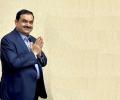
Adani group opened a $1.2 billion copper plant, bought a port in Odisha, raised stakes in a cement company and stitched an alliance with rival Mukesh Ambani's Reliance Industries, all in a matter of one week in signs that the apples-to-airport conglomerate has shrugged off the Hindenburg effect and is back to rapid expansion spree. In the last one week, Adani group has through regulatory filings and press statements announced expansions and investments in its mainstay ports business, diversification into metal refining, fund infusion into a two-year-old cement foray and continuing progress in the commissioning of its mega solar project.

In its consultation paper Trai addressed three key points including the bundling of channels under bouquets, rampant discounting within bouquets, and the lack of consumer choice.

Hearing from Apr 18 by five-judge SC bench against WhatsApp, FB move; Centre, Trai also summoned
Trai's regulatory intervention was supposed to stimulate the market, but the latest order seems quite on the contrary, asks Nivedita Mookerji.
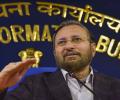
The Union Cabinet on Wednesday approved revision in guidelines for providing direct to home (DTH) services in the country under which licenses would be issued for 20 years, Union minister Prakash Javadekar said. The Union Cabinet has also approved 100 per cent FDI in the DTH broadcasting services sector, Javadekar said, adding that while the commerce ministry had spoken of 100 per cent FDI in the DTH sector, the guidelines of the information and broadcasting ministry needed to be changed.
.jpg)
The ministry's move to intervene in the matter comes 20 days before implementation, after broadcasters complained they would suffer huge loss because digitisation was still in the first phase across the country.

Trai said, the operators should ensure that payout per month of the 'best fit plan' generally does not exceed the payout per month of existing tariff plan of the subscriber.

Until 2014, Discovery's channels were distributed as part of a joint venture with Multi Screen Media.
Here we present a FAQ on the present model of regulation of different forms of media.

India on Wednesday said an effective action by Pakistani government against the LeT and other terror outfits will have to go far beyond "merely" proscribing their publicity through electronic media.
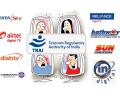
The Trai order is expected to change how consumers pay for cable or DTH services. This will result in disruption within the TV viewing market.

Vagela could not have reached this position if Narendra Modi, who'd known him from his chief minister days, had not backed the choice.

"The JuD and the Falah-e-Insaniat Foundation are the other wings of Lashkar-e-Taiba," the PEMRA notification said.

Writes to Trai, Mumbai Police to catch unauthorised SMS senders

PEMRA will only allow airtime to Indian content if India allows airtime to Pakistani content.

At the heart of the issue is the way e-commerce is defined in the current draft policy.

Telecom regulator Trai on Monday recommended about 39 per cent reduction in the reserve or floor price for the sale of spectrum for mobile services, including the latest 5G offering, as it looked to match revenue expectations with the industry's paying capacity. With large swathes of spectrum remaining unsold in the last two auctions, the Telecom Regulatory Authority of India (Trai) recommended to the government for selling airwaves in all existing bands of 700 MHz, 800 MHz, 900 MHz, 1800 MHz, 2100 MHz, 2300 MHz, 2500 MHz and new slots of 600 MHz, 3300-3670 MHz and 24.25-28.5 GHz. It has suggested a lower reserve price for all bands, compared to the prices proposed in the previous recommendations in 2018.

"Our soldiers don't have any personal animosity with Pakistani soldiers. The bullets our soldiers face are not filmy. Salman gets up after being hit by a bullet," Raj said, reacting to Salman's remarks, adding "I have seen his tubelight blinker many a time."

Mumbai police commissioner Param Bir Singh told reporters that a national TV news channel, facing flak over its attack on Mumbai police and Maharashtra government in the Sushant Singh Rajput death case, was also involved in the TRP racket.

If a feasible business model is worked out for cable operators, they will not only build the last-mile networks, but also market them among the local population telling people the benefits as well as how to utilise them
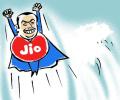
Given the fragmented nature of the domestic cable TV market and the need for last-mile connectivity, RIL, said sources, would have to do more to achieve its target of reaching 20 million homes and 15 million business establishments with its broadband services across 1,600 towns in the next few years.
 © 2026 Rediff.com - Advertise with us - Disclaimer - Privacy Policy - Sitemap - Feedback - About us - Terms of use - Grievances